Facebook
 X
X
 Pinterest
 Copy Link
I recently ran into an interesting situation with one of my buyers.
I sent them a property that looked great on paper. Good location, solid price, and no obvious red flags. A little later, they texted me saying the home was in a flood zone.
That surprised me.
I checked the official flood map from the Federal Emergency Management Agency, also known as FEMA. The property showed Zone X, which means minimal flood risk. Then my buyer sent me a screenshot from Redfin.
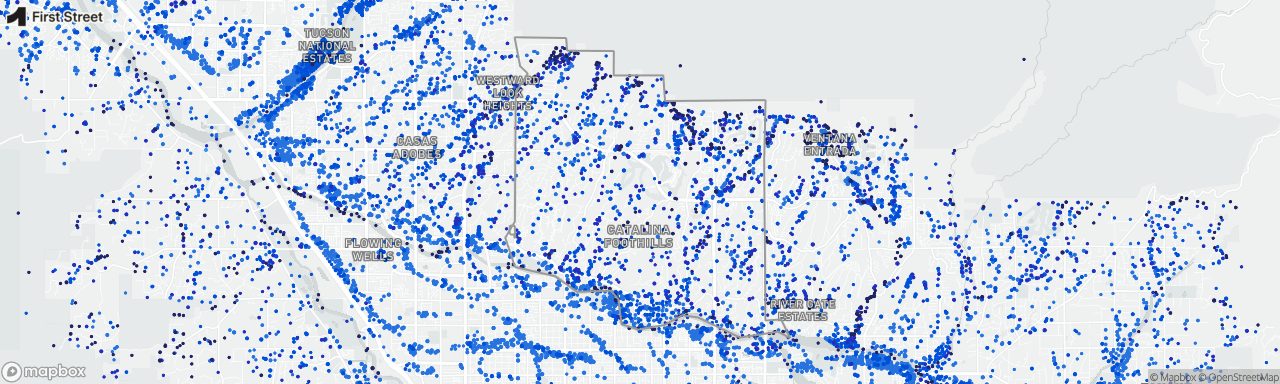
Sure enough, their map showed a fairly high flood risk. That is when I realized we were looking at two completely different flood models.
This is where the conversation about FEMA vs First Street flood maps becomes important for buyers.
Why Flood Risk Is Getting More Attention
If you have watched the news lately, you know weather patterns are getting a little wild.
Here in Tucson, we are already talking about temperatures possibly hitting 104 degrees in March. That is not exactly normal. Across the country we see stronger storms, heavier rainfall, and unexpected flooding. Because of that, new tools now try to predict future flood risk.
That is where First Street Foundation comes in.
Companies like Redfin use First Street data to estimate flood risk based on climate models and future projections. This creates a situation where two maps can show very different results.
What FEMA Flood Zones Actually Mean
FEMA flood zones come from the Flood Insurance Rate Maps, often called FIRMs.
These maps focus on historical flood patterns. They show areas with a 1 percent annual chance of flooding, which many people call the 100 year flood zone.
Common FEMA zones include:
-
Zone A – High flood risk
-
Zone AE – High flood risk with mapped flood elevations
-
Zone X – Minimal flood risk
If a property sits in a high risk FEMA zone and the buyer uses a federally backed loan, lenders usually require flood insurance. Homes in Zone X typically do not require flood insurance for financing. In other words, FEMA maps play a direct role in lending decisions.
How First Street Flood Maps Work
First Street takes a different approach.
Instead of focusing only on historical floods, their models try to estimate future flooding risk. They use data such as rainfall trends, topography, and climate projections. Real estate sites like Redfin display this information as a flood score. So a property might show low risk on a FEMA map but still receive a higher risk rating from First Street.
This does not mean the home will flood tomorrow. It simply means the model predicts a higher chance over time.
Which Flood Map Matters for Financing?
This is the part buyers usually want to know first.
When it comes to mortgages, FEMA maps still control the process.
Lenders use FEMA flood zones to decide if flood insurance is required. If a property sits in Zone X, most lenders will not require flood insurance. However, a buyer can still choose to purchase a policy for peace of mind. The First Street score does not affect loan approval today. It simply provides additional information.
Why Both Maps Still Matter
Even though lenders rely on FEMA maps, I still think the First Street data has value.
Technology keeps improving. The more information we have, the better decisions we can make. If a model suggests possible flood risk in the future, it may be worth asking a few more questions. I sometimes suggest buyers look at drainage patterns, nearby washes, or the elevation of the lot.
In Tucson and the surrounding areas, flash flooding can happen quickly during monsoon season. Most longtime locals know how powerful desert water can be.
The Bottom Line for Tucson Buyers
FEMA maps remain the standard for lending and insurance requirements. Those maps determine whether flood insurance is mandatory.
First Street data offers something different. It tries to show what future risk might look like as weather patterns change.
Personally, I like having both tools available.
The more prepared we are as buyers and homeowners, the better. After all, nothing is worse than having your house flood.
Have questions for me, give me a call or text at (541) 521-0145, or click here to go to my contact page.
You can also follow me on Instagram for behind the scenes marketing, new listings, and Tucson real estate updates. Click here to head to my Instagram!