Facebook
 X
X
 Pinterest
 Copy Link
Why I Always Recommend a Sewer Scope When Buying a Home

When buyers think about inspections, they usually picture the roof, HVAC, or foundation. The sewer line rarely comes to mind. In my experience as a Tucson real estate agent, that underground pipe can become one of the most expensive surprises a buyer faces.
That is why I always recommend getting a sewer scope during the inspection period.
It is a small add-on that can prevent a very big problem later.
What Is a Sewer Scope?
A sewer scope is a camera inspection of the main sewer line that runs from the house to the city connection. An inspector inserts a small waterproof camera into the line and records the condition of the pipe.
The camera travels through the pipe and shows what is happening underground. You can see cracks, buildup, roots, or other issues that would otherwise stay hidden.
Most general home inspections do not include this service automatically. Many inspection companies offer it as an optional add-on.
In Tucson, that add-on usually costs around $75 when bundled with a home inspection.
Why a Sewer Scope Is Important
Sewer lines stay out of sight, so many buyers assume they work fine. Unfortunately, that is not always the case.
I have seen deals fall apart because of sewer problems. Repairs can become very expensive if the main line fails.
In many cases, a full sewer line replacement can cost $10,000 or more (sometimes much more!).
A sewer scope gives buyers information before closing instead of after moving in.
Sewer Scope Issues in New Construction Homes
Many people assume new construction homes do not need a sewer scope. I still recommend one every single time.
New homes can have sewer issues too. There have been cases where sewer systems were not connected at all. That means sewage ran directly under the home. I have also seen warped pipes, construction debris inside the line, and even cement blocking sections of pipe.
Builders move quickly, and mistakes happen. A quick camera inspection can catch those problems early.
Sewer Scope Issues in Older Homes
Older homes can develop different types of sewer problems over time.
Tree roots often grow into pipes while searching for water. Mineral buildup can slowly restrict the flow inside the line.
Pipes can also crack, shift, or collapse as the ground settles.
A sewer scope makes these problems visible before they become a major repair.
Two Ways to Get a Sewer Scope
Buyers usually have two options for getting a sewer scope.
The first option is adding it through the home inspection company. Many inspectors offer the service for about $75 as an additional inspection item.
Inspectors typically provide the video footage but not repair quotes.
If the scope shows a problem, you can send that video to a plumber for an estimate.
The second option is hiring a plumber directly. In the Tucson area, plumbers usually charge $100 to $175 for a sewer scope inspection.
This option costs more, but plumbers can often provide repair quotes on the spot if they find a problem.
My Advice as a Tucson Realtor
After years in real estate, I have learned one simple rule: Always get a sewer scope.
It does not matter if the home is brand new or fifty years old. That small inspection can reveal hidden issues that might otherwise cost thousands of dollars after closing.
When buyers ask me which inspections are worth the extra cost, this one always sits near the top of my list.
Spending $75 now can protect you from a five figure repair later. That is an easy decision in my book.
Have questions for me, give me a call or text at (541) 521-0145, or click here to go to my contact page.
You can also follow me on Instagram for behind the scenes marketing, new listings, and Tucson real estate updates. Click here to head to my Instagram!
What to Expect During the Arizona Closing Process

If you’ve bought or sold a home in another state, the Arizona real estate closing process might feel a little different. I walk my clients through this all the time, and honestly, it surprises a lot of people.
Here in Arizona, closing is not one big event where everyone sits around a table and gets keys on the spot. It’s more of a sequence. Once you understand the flow, it actually feels a lot smoother and less stressful.
Let me break it down the way I explain it to my own buyers and sellers.
Arizona Real Estate Closing Process Timeline
The biggest thing to know is that signing and closing are not the same thing.
In Arizona, I always try to have my clients sign their documents a day or two before the actual closing date. This gives us breathing room and helps avoid last-minute issues. I’ve found that this approach makes closing day feel calm instead of chaotic.
The exact timing depends heavily on the lender. They need to finalize the Closing Disclosure and balance everything before sending figures to the title company. Until that happens, we are all kind of waiting.
Sellers usually have more flexibility here since they are not waiting on loan documents. Cash buyers also have more control over timing, which can make things move faster.
Why the Arizona Real Estate Closing Process Feels Different
In some states, buyers get their keys the moment they sign. That is not how it works here.
In Arizona, signing early is normal. Ownership does not transfer until the transaction records with the county. That step matters as much as the signing itself.
Once the buyer signs, the title company sends the full package to the lender. The lender reviews everything and then funds the loan. After funding, the documents go to the county for recording.
Only after recording do we officially have a closed transaction.
That is the moment I call my clients and say, “You’re officially homeowners.”
What Happens on Closing Day
If we do things right, closing day feels easy.
Since most of the paperwork is already signed, the title company can send everything to the county first thing in the morning. When recording happens early, my buyers usually get their keys sooner.
I actually prefer this setup. I’ve heard of too many stressful closings in other states where everything hinges on one appointment. In Arizona, we spread things out, which gives us more control.
My Take as a Tucson Realtor
Working here in Tucson and the surrounding areas, I’ve seen how smooth this process can be when everyone stays on schedule.
When lenders, title companies, and agents communicate well, closings feel predictable. That is always my goal for my clients. I want them to feel informed, not overwhelmed.
I also remind my buyers not to plan movers based on their signing appointment. Plan around the recording instead – and always leave some wiggle room. Recordation is the real finish line.
Final Thoughts on the Arizona Real Estate Closing Process
The Arizona real estate closing process might not be what you expect if you’re coming from another state, but there is a reason for it.
Signing early gives us flexibility. Recording confirms ownership, and that final step is what truly matters.
If you ever have questions about timing, keys, or what to expect, I’m always here to walk you through it. This is one of those parts of the transaction where having the right guidance makes all the difference.
Have questions for me, give me a call or text at (541) 521-0145, or click here to go to my contact page.
You can also follow me on Instagram for behind the scenes marketing, new listings, and Tucson real estate updates. Click here to head to my Instagram!
Is Spring a Smart Time to Buy? A Real Look at the Tucson Spring Housing Market

Every year, I get the same question from buyers.
“Should we wait for spring?”
The truth is, Tucson spring home buying has real advantages. It also comes with tradeoffs. If you understand both, you can make a smart move instead of an emotional one.
Let’s look at what the numbers are telling us right now.
What the Recent Market Data Shows
In January 2026, 1,014 homes sold. That was down 21.15 percent from December and slightly lower than January 2025.
That dip is normal for winter. Activity often slows after the holidays. Buyers travel. Sellers pause.
But here is what matters. When sales volume drops in winter, it often sets the stage for a busier spring.
We see this pattern almost every year in Tucson and the surrounding areas.
The absorption rate also trends upward as we move into spring. When absorption rises, homes sell faster. That usually means more competition for buyers.
Now let’s break down what that means for you.
The Pros of Buying in the Spring in Tucson
1. More Inventory Hits the Market
Spring brings listings. Sellers want fresh landscaping, blooming yards, and strong curb appeal.
In neighborhoods across Tucson, Oro Valley, Marana, Sahuarita, and Vail, inventory typically increases as temperatures warm up.
More options give you choices. You can compare floor plans, lot sizes, and locations without feeling boxed in.
I personally love when my buyers have options. It gives us leverage and perspective.
2. You See Homes at Their Best
Desert landscaping looks better in spring. Pools sparkle. Mountain views feel clearer.
If you are buying in areas like the Catalina Foothills or Rancho Vistoso, spring showings help you experience the property in prime condition.
That matters long term.
3. School Timing Works for Many Families
Spring contracts often lead to early summer closings. That timeline works well for families who want to move before the next school year.
If you are relocating to the Tucson area, spring may align perfectly with job transitions too.
The Cons of Buying in the Spring in Tucson
1. More Competition
As absorption rises, buyer activity increases. That creates competition.
When more buyers enter the market at the same time, you may see multiple offer situations. Sellers gain confidence during this period.
I prepare my buyers for this. We go in strong and strategic, not reckless.
2. Pricing Can Firm Up
When demand rises, pricing follows. Sellers watch the same trends we do.
If sales volume rebounds in February and March, sellers often price higher than they would have in January.
Winter buyers sometimes secure better terms simply because fewer people compete for the same home.
3. Decision Fatigue Is Real
More listings sound great. But more listings also mean more decisions.
I have seen buyers feel overwhelmed by choice in peak spring markets. It helps to stay focused on your must haves.
What This Means for Tucson Spring Home Buying
Right now, the data shows winter slowed activity. That is typical. If history repeats, we will see increased listings and stronger absorption as we head into spring.
So should you wait?
It depends on your situation.
If you want maximum choice and you are comfortable competing, spring can be a great time to buy.
If you want less pressure and possibly more negotiating room, late winter may offer opportunity before the crowd arrives.
I always tell my buyers this. The best time to buy is when you are financially and mentally ready. The season should support your plan, not dictate it.
My Take as a Local Realtor
I have worked in the Tucson market for years, and I watch these cycles closely.
Spring brings energy. It brings activity. It brings beautiful listings.
But smart buyers win in every season.
If you are thinking about Tucson spring home buying, let’s look at your timeline, budget, and risk tolerance. Then we can build a strategy that fits you, not just the season.
Because in this market, strategy matters more than timing.
Ready to get started? Give me a call or text at 541-521-0145, or head to my contact page by clicking here!
Grow Shade and Save: Why I Love the TEP Trees For You Program
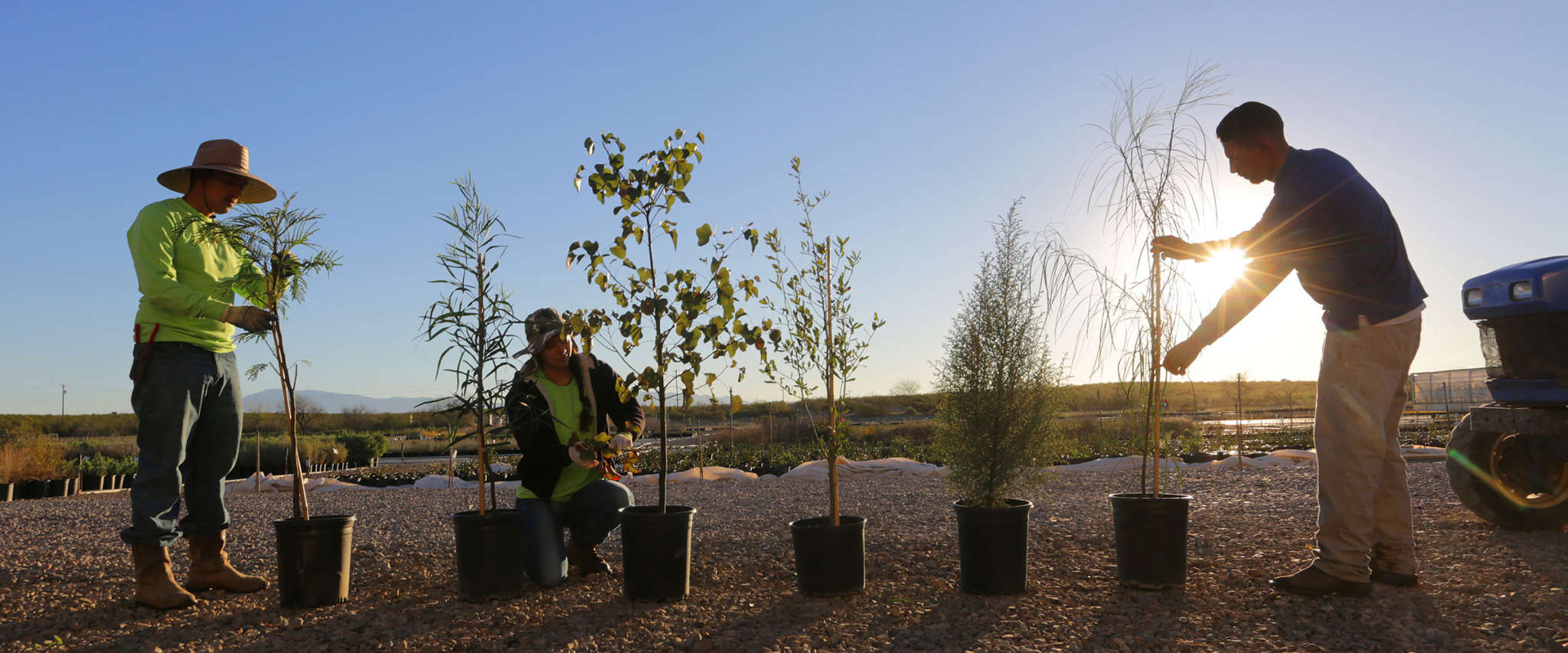
If you live in the Tucson area and you get your electricity from Tucson Electric Power (TEP), you might already know how hot our summers can get. Today I want to share something simple that helps your home, your wallet, and our neighborhoods. It’s called the TEP Trees For You program and I am honestly impressed by it.
The idea is easy: TEP offers discounted shade trees to residential customers. You log into your TEP account, choose the trees you want, and pick them up at a local nursery once TEP emails you that they’re ready. Each tree is only $5. You can order up to two 5-gallon shade trees.
Why should you care about shade trees in Tucson? I think about my own home and how the summer sun blasts the west side of my house. Trees planted in the right spots can cool your home naturally, which can help cut down on how hard your air conditioner runs. It’s good for your energy use and good for your bills too.
Shade trees do more than cool your house. They enhance yards, create habitat for birds and pollinators, help clean our air by absorbing carbon dioxide, and slow stormwater runoff. And frankly, they make our streets feel more like home.
How It Works
Here’s a quick walk-through:
-
Log into your TEP My Account and look for the Trees For You option.
-
Choose up to two trees from the available list. They include options like Native Mesquite, Lacebark Elm, Arizona Ash, Pomegranate, and a few others.
-
Confirm your order carefully because you can’t change or return it once placed.
-
TEP will email you when your trees are ready. Pick them up at one of the participating nurseries like Harlow Gardens or Civano Nursery.
This program runs while supplies last, and trees are first-come, first-served.
My Tucson Tree Tips
I recommend thinking about where your tree will give the most shade. For Tucson’s heat, planting on the west or south side of your home can make a real difference in cooling. Also remember to call Arizona 811 before you dig so you know where underground utilities are located.
Why I Share This
I love highlighting local efforts that make Tucson better. This program isn’t just about planting trees. It’s about building cooler, greener neighborhoods over time. So if you haven’t checked TEP Trees For You program yet, do it. The next time you login to pay a bill, take a minute and see what trees you could bring home this year.
Read more about the program here!
Before you go, I’d love to conenct on social media! Click here to head to my Instagram.
Or, if you’d like to reach out to me directly, give me a call or text at 541.521.0145, or head to my contact form here!
Housing Affordability 2016 vs 2025: What the Last 10 Years Really Changed
Everywhere online right now, people are sharing how much their lives have changed over the last 10 years. Careers. Families. Finances. So when the National Association of Realtors released a 10-year housing update, I paid attention.
And honestly, some of the data stopped me in my tracks.
As both a Realtor and a consumer, this data genuinely concerns me. At the same time, I think parts of the conversation miss some important context. The truth is more nuanced than the headlines suggest.
This is my take on the housing affordability 2016 vs 2025 conversation.
The Data Tells a Tough Story at First Glance
Here is what the national housing market looks like when you compare 2016 to today.
Home prices
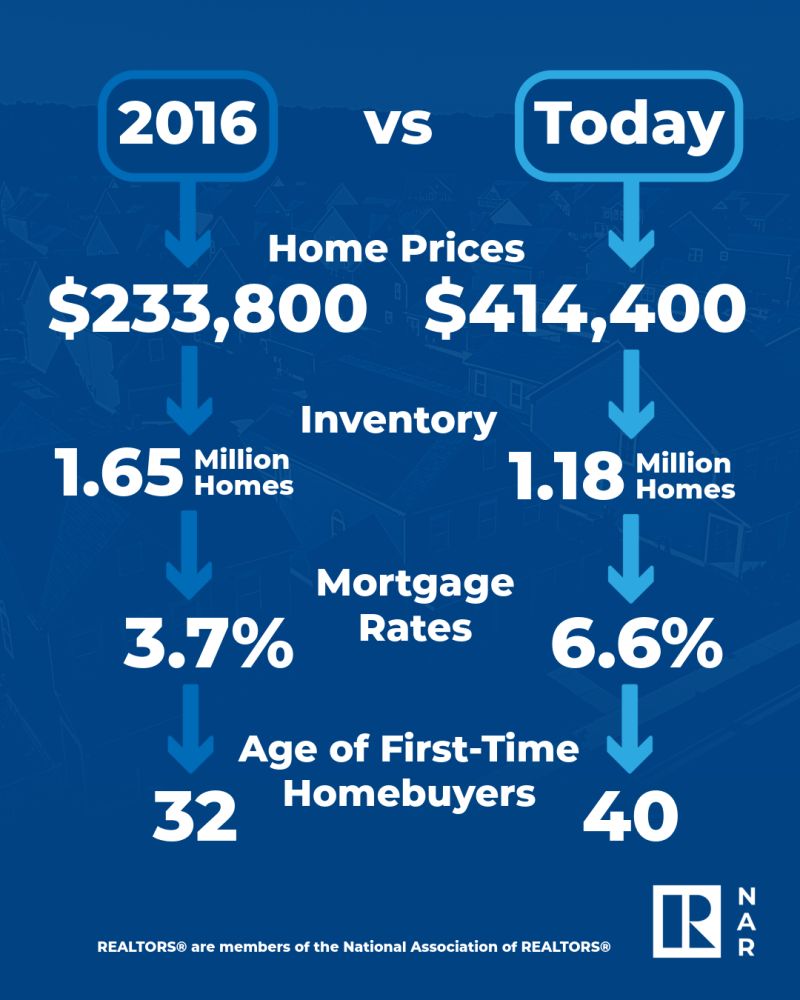
In 2016, the median home price was $233,800.
In 2025, it sits around $414,400.
That is a 77 percent increase.
Inventory
In 2016, about 1.65 million homes were for sale.
In 2025, that number is closer to 1.18 million.
We are still short roughly 470,000 homes.
Home sales
About 5.45 million homes sold in 2016.
Roughly 4.06 million sold in 2025.
That is a difference of 1.39 million transactions.
Mortgage rates
Rates averaged about 3.7 percent in 2016.
In 2025, they hover near 6.6 percent.
Housing affordability
The affordability index in 2016 was 166.2.
That meant the typical family earned about 66 percent more than needed to qualify.
By the end of 2025, the index dropped to 108.2.
Homes are still technically affordable, but barely.
First time buyer age
The median age jumped from 32 to 40.
That eight year shift matters more than people realize.
On paper, this looks bleak. I get why buyers feel discouraged.
The Part We Do Not Talk About Enough
Here is where I think nostalgia gets selective.
Yes, buying a home in 2016 was easier. Prices were lower. Rates were lower. Entry felt simpler.
But once you owned, the picture was different.
In 2016, the average homeowner had built less than $15,000 in equity over ten years. The market was still recovering from the housing crash. Many owners had limited flexibility. Moving up felt risky. Renovations were harder to justify. Life changes often came with financial stress.
Fast forward to today.
The average homeowner has gained about $214,210 in equity over the last decade. That number still surprises people. It should.
Equity changes everything. It creates options. It provides a buffer. It allows people to move, remodel, downsize, or pivot without starting from scratch.
So while housing affordability 2016 vs 2025 clearly shows that entry became harder, ownership became far more powerful.
Why This Matters to Me as a Realtor
I work with buyers every day who feel like they missed their chance. I hear the frustration. I feel it too.
That is exactly why I am so committed to helping my buyers get into homes they can afford now. Not perfect homes. Not forever homes. Smart first homes.
Real estate is still one of the most reliable ways to build long term wealth. The hardest part is getting your foot in the door. Once you are in, time and equity start working for you.
I never want fear or comparison to be the reason someone stays on the sidelines.
How New Builds Fit Into This Conversation
This is also why I continue to talk about new construction.
While new builds are not a cure-all, they play an important role right now. Builders are increasing supply, and single-family housing starts are up about 20 percent compared to 2016.
In addition, many builders offer incentives that help offset higher interest rates. For some buyers, predictable costs and fewer immediate repairs make ownership more achievable.
For many of my clients, new construction creates a practical entry point when resale options feel out of reach. That connection is why this data ties directly to my recent blog post on new builds. Check out that post here!
A Tucson Perspective
Here in Tucson and the surrounding areas, these trends feel very real. Our market continues to see limited resale inventory and steady demand. At the same time, new construction in places like Vail, Marana, and Oro Valley provides buyers with additional options.
Because every neighborhood behaves differently, local strategy matters more than ever. Pricing, builder incentives, and timing all play a role.
Looking Ahead
I do believe 2026 will bring better balance. Supply is improving. Builders are adjusting. Buyers will have more options than they have had in years.
Until then, my focus stays the same. I want my buyers to buy smart, stay within their comfort zone, and start building equity sooner rather than later.
The market changed. The opportunity did not disappear. It just looks different now.
I share local market updates, buyer strategies, and behind-the-scenes real estate life on Instagram. If you want to follow along, I’d love to have you there. Click here to head to my Instagram!